Retrospective: Turning Process Gaps into “Gems” (AI Apprenticeship Module 1)
1. Module 1: Building on a Foundation of Safety
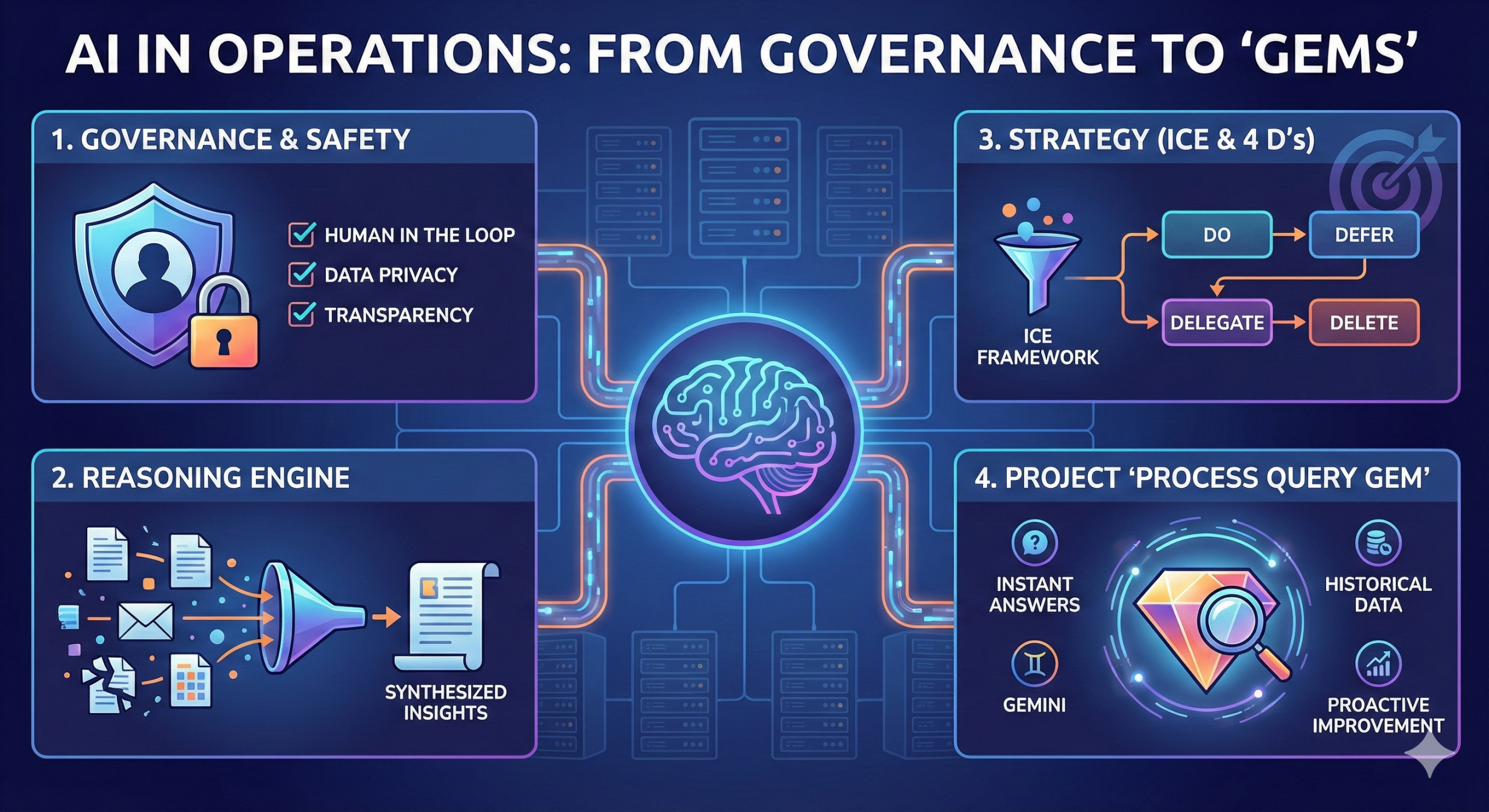
Module 1 started not with prompt engineering, but with governance. In a corporate environment, innovation cannot come at the expense of security, which is why the curriculum prioritized aligning with the Partnership’s AI Policy from day one. The initial focus was on adopting a strict “Safety First” framework: keeping a “Human in the Loop” to verify every output, ensuring no client data or IP ever touches a public model, and maintaining absolute transparency about when AI is used. This discipline establishes AI not as a risky variable, but as a trusted enterprise tool.
2. The Shift: From Search to “Reasoning Engine”
Beyond safety, the core technical lesson centered on the shift from traditional search to using GenAI as a “Reasoning Engine.” Unlike standard software that simply retrieves data, the module demonstrated how GenAI can synthesize fragmented information—like scattered process notes or email threads—to create entirely new, coherent documentation. It functions as a “creative specialist,” bridging the gap between merely possessing data and actually deriving actionable insights from it.
3. Strategy: The ICE Framework and the 4 D’s
To prevent “tool fatigue,” the training introduced specific strategic frameworks to determine what to automate. I have decided to use two of them for my project:
The ICE framework (ranking tasks by Impact, Confidence, and Ease) and the
Four D’s serve as the primary filters. Tasks are categorized as Do (automate routine work now), Defer (save complex integrations for later), Delegate (let peers pilot new tools), or Delete (remove non-value-added tasks entirely). This ensures the focus remains on the 20% of work that delivers 80% of the productivity gains.
I have placed two videos from Youtube describing two prioritization methods below, but you can found many more resources on internet:
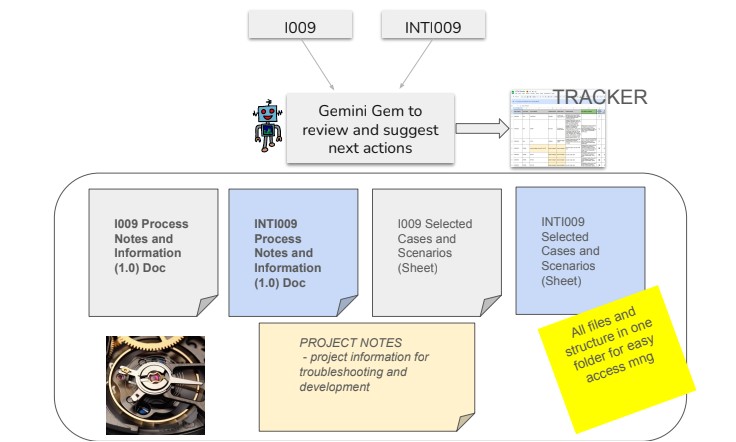
4. The First Project: The “Process Query Gem” I have then decided to target a specific process within our team – Coupa to Oracle interface failures, invoices failing to transition succesfully between two systems we use. To address the repetitive queries surrounding this issue, I am designing a pilot concept called the “Process Query Gem.” This custom version of Gemini will analyze our historical solution data to provide instant, cited answers to the team. The goal is to move away from a cycle of repetitive support and free up human capital for proactive improvements.